
Key Roles in Project Management

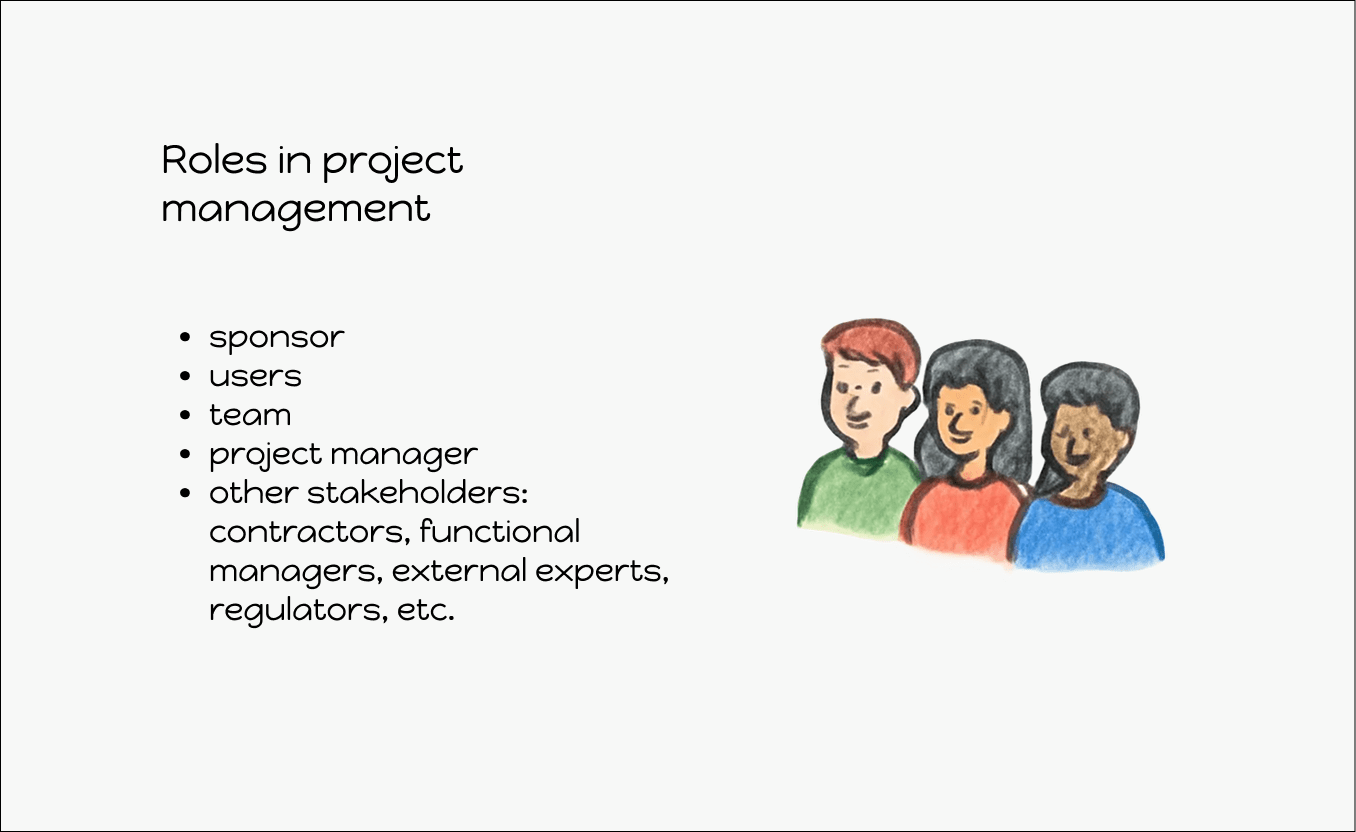
Understanding who does what in a project isn’t just a formality — it’s the difference between smooth collaboration and total chaos. When everyone uses the same terms for roles and responsibilities, communication becomes faster, clearer, and far less dramatic. And yes, this applies to you, your team, leadership, and even the clients who sometimes forget they're part of the process.
So let’s break it down together.
The sponsor and the user
Let’s start with the sponsor — because getting this role wrong can derail an entire project before it even starts. Your sponsor is the person who funds the work. Simple, right? Except when it isn’t. If you latch onto the wrong sponsor, you’ll spend months chasing approvals from someone who can’t actually give them.
So identify the sponsor early, confirm it, and make sure everyone knows who holds the wallet.
Now, the user is a different story. The user is the person who will actually use what you’re building — the consumer of the final outcome. They’re not paying for the project, but they’re the reason it exists in the first place. And yes, sponsors and users sometimes disagree. That tension isn’t a bug; it’s part of the job.
Imagine you're a project manager at a small company of 100–150 employees that assembles and supplies ATMs. One day, the company’s director introduces you to a new potential client who wants to purchase ATMs worth a million dollars. Great news for the business… but a perfect setup for confusion about roles.
At first glance, you might assume the client is the sponsor. They’re paying a million dollars, right? But here’s the twist:
the client is the user — not the sponsor.
Why? Because the sponsor isn’t the one who pays the company.
The sponsor is the one who funds the project itself.
The client pays the company a million dollars, but the project’s budget — the real money you can use — is whatever the director decides to give you. That’s the sponsor’s defining power: they control the resources available to deliver the work.
This distinction becomes even clearer when you look across industries:
- Construction: project managers may directly manage the budget, allocating money themselves.
- IT: project managers usually don’t touch money. Instead, they’re given resources — analysts, testers, designers, engineers — and told, “Here’s your team. Deliver the result in this timeframe”.
In this setup, people are the budget. Their salaries come from the director, making the director the sponsor. - Hybrid IT setups: you get a team and a budget for tools, licenses, equipment. Still, the sponsor is the one who authorizes these resources.
So, back to our ATM project:
The director is the sponsor, not the client.
Your director decides how much money, how many people, and what tools you get — and those decisions shape the entire project.
And here’s why it matters:
There is usually one sponsor, and you absolutely need to know who that person is.
The sponsor:
- evaluates your performance;
- decides what “success” means;
- influences the project triangle (scope, time, resources);
- can change priorities, budgets, and expectations with a single conversation.
The team, project manager, and other stakeholders
The team is the group of people who actually do the work: engineers, analysts, testers, designers, and whoever else is hands-on in delivering the project. This is the core crew.
The project manager is the most familiar role, so no surprises here. You’re the person responsible for guiding the team toward the project’s goals while balancing the famous project triangle of scope, time, and resources. Your job is to keep things moving, keep communication flowing, and keep expectations grounded in reality.
Then we have stakeholders, a category that is both incredibly important and annoyingly broad. Stakeholders include:
- project manager;
- sponsor;
- user;
- team;
- plus anyone else who has something to gain, lose, or influence in the project.
That “anyone else” bucket can include external experts, regulators, partner companies, even competitors who care about the project’s outcome for strategic reasons. Basically, if someone’s interest shifts when your project succeeds or fails — congratulations, they’re a stakeholder.
Interplay of roles within the triangle
Understanding the roles is important, but understanding how they interact is where project management actually comes alive. Inside the project triangle, you have the manager and the team. They’re the ones shaping the plan, doing the work, and making trade-offs between scope, time, and resources. This is the engine room of the project — the place where things actually get built.
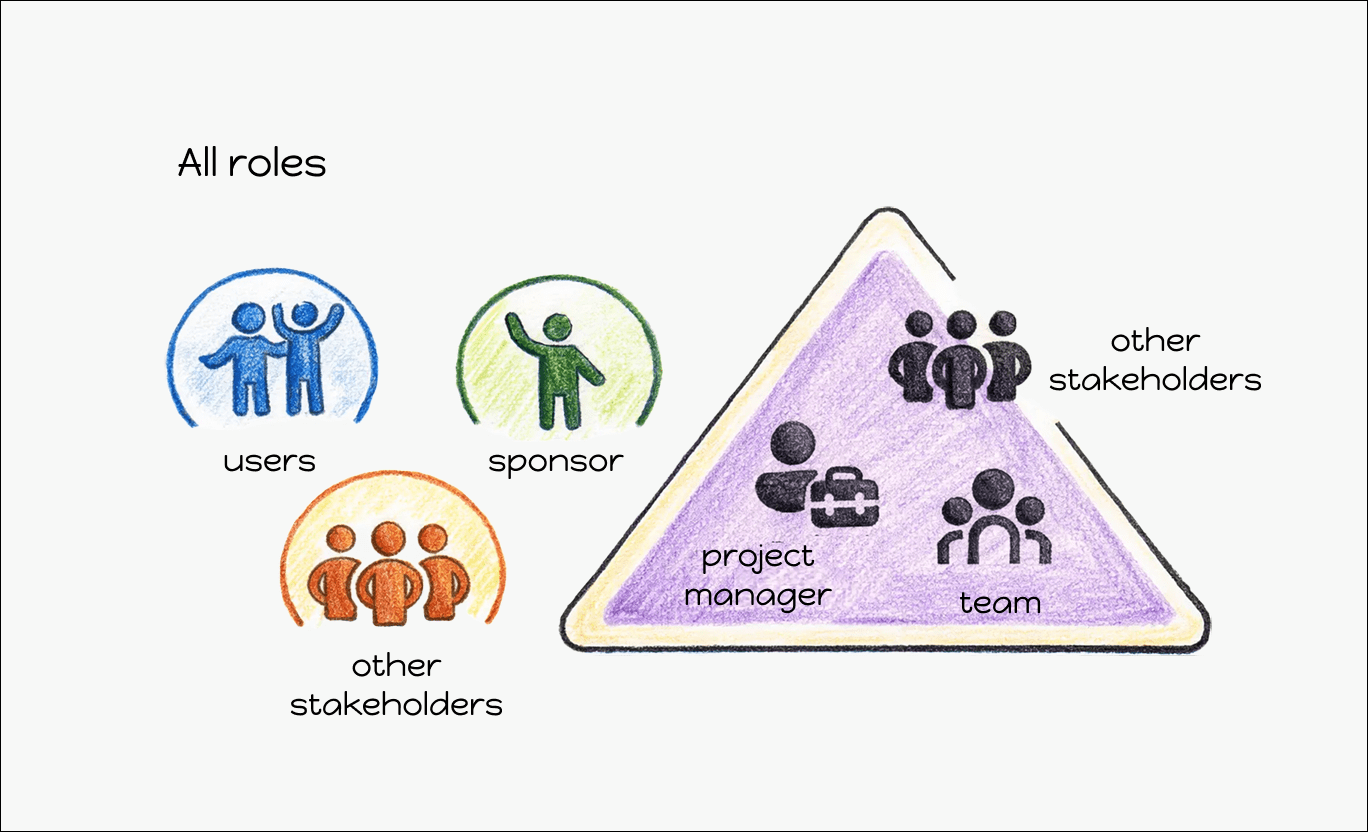
The sponsor, meanwhile, sits outside the triangle. They’re the one providing financial resources and agreeing on the overall scope with the project manager. Their involvement is strategic, not operational. They set direction, approve budgets, and evaluate success — but they don’t get involved in the day-to-day details.
And that’s a good thing. The project is managed by the manager, not the sponsor.
The users have an even lighter touch. They don’t care how many stand-ups you run or which dependency is giving you trouble. What they do want is confidence: that the work is moving forward, that key milestones are met, and that the final outcome will be worth waiting for. Sharing major updates helps them build the right expectations and keeps everyone aligned, even if they’re not watching the project minute by minute.
Conclusion
Projects fall apart when roles are vague, and they come together when everyone knows exactly who does what. The sponsor funds the work, the project manager steers it, the team delivers it, and the users shape what “good” ultimately looks like. Each role pulls a different lever, and together they determine whether the project moves smoothly or constantly fights against itself.
When you understand these roles — and communicate them clearly — everything gets easier. Decisions are faster. Expectations are realistic. Collaboration actually works. And as a project leader, you’re no longer guessing who to involve or who has the authority to move things forward.